DC Food Future: Planting the Seeds of Justice

Healthy Affordable Food for All, will host ” DC Food Future: Planting the Seeds of Justice” at Soul 57 in NE, DC from 9:30am – 5pm on Saturday, December 8th. The event is free and was announced as part of the Season of Coops–an extended celebration of the International Year of Cooperatives in DC. There will be activities for all ages, food and childcare.

Eventbrite - DC Food Future: Planting the Seeds of Justice

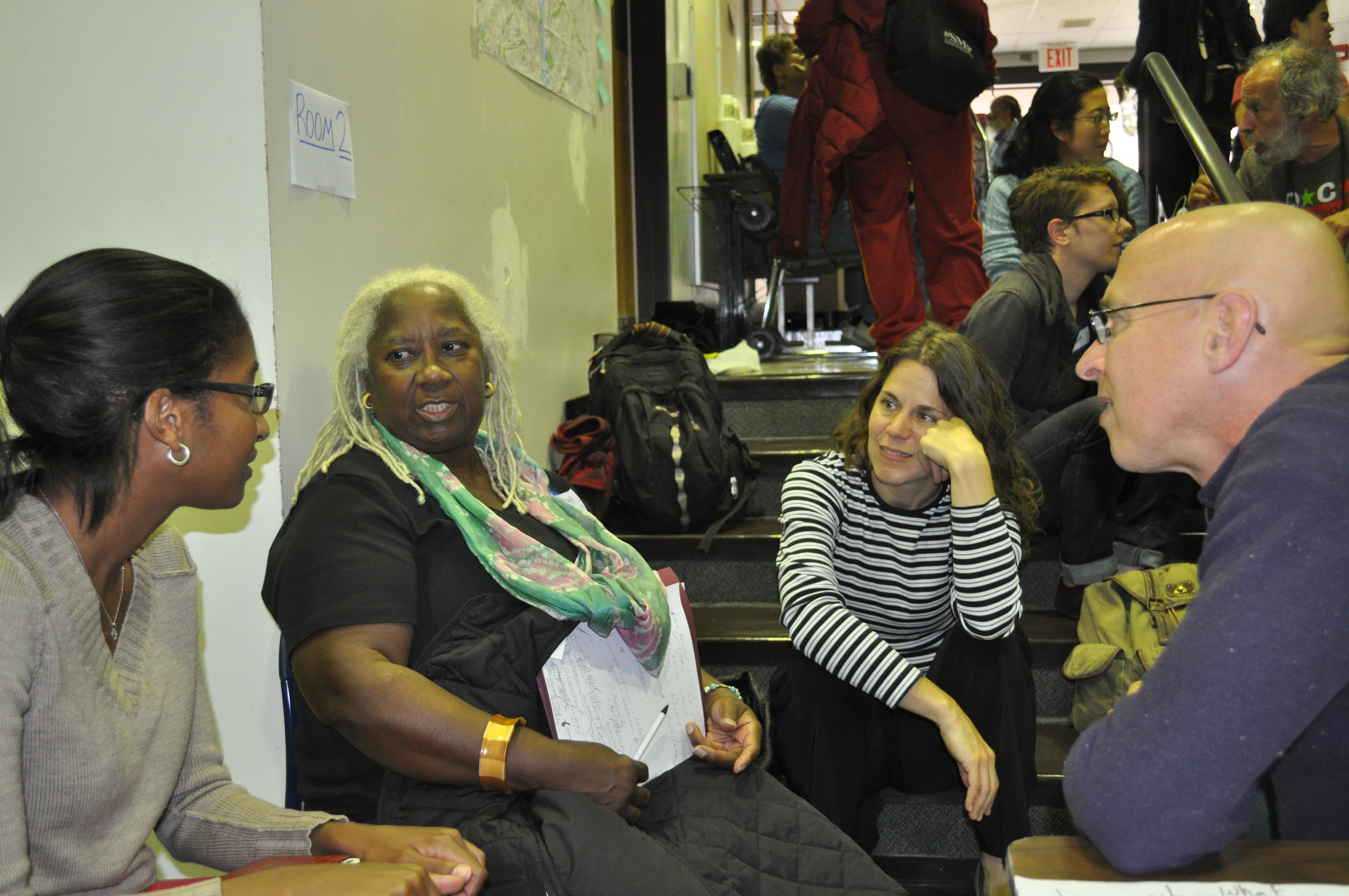
DC Food Future marks the end of 2 years of community conversations about the DC food system and neighborhood-level solutions to food justice issues. HAFA has held over 15 “Community Brainstorms” with 350 participants from communities all over DC. On the 8th, HAFA will share Community Brainstorm results with past participants.

If you’ve never heard of HAFA, there’re still lots of reasons to come. You will be able to join the HAFA network and participate in food justice work going on in the city right away. The ultimate goal is to bring people together to create a more healthy, just food system in DC.

“Together, we will create a vision and a map for a just food system.” says Joni Podschun, Campaign Manager.

The workshops and activities are sponsored by folks in the HAFA network like Sariane Leigh, Anacostia-based yoga teacher, known to most as the Anacostia Yogi. Leigh will be presenting a workshop called “Hood Rich and Healthy” about local businesses that support community health.

There will also be cooking demos, food tastings and a marketplace sponsored by Dreaming Out Loud’s Aya Community Markets.

HAFA is a volunteer-powered food justice network, that meets regularly on Mondays to share food and connect people from all over the city having a direct impact on the food system. Learn more and register for the FREE event at dcfoodfuture.eventbrite.org.  To find out how you can join the network, contact hafadc [at] gmail.com.

Shift Change documentary comes to DC

On Dec. 17, 2012, you have two chances to see a brand new film about dignified jobs in democratic workplaces, from Mondragon to the Rust Belt and beyond. Shift Change: Putting Democracy to Work is a documentary film by veteran award-winning filmmakers Melissa Young and Mark Dworkin. It tells the little known stories of employee owned businesses that compete successfully in today’s economy while providing secure, dignified jobs in democratic workplaces.  For general information about the DC screenings, visit http://community-wealth.org/shiftchange.

To reserve your space for the daytime screening with pre-screening panel:http://www.facebook.com/events/226136770851366/. Panelists include Gar Alperovitz, Liz Bailey, Michael Peck and Leo Gerard.

To purchase tickets for the evening screening:http://www.facebook.com/events/312201322228050. Proceeds from this screening go to cooperatives recovering from Hurricane Sandy.

Teen Sunflower Seed Farming Cooperative

Do you know of any local youth groups who are already gardening or who might enjoy it? Reve Dele is looking for about 5 groups of 10 to participate in the nutrition, permaculture, and cooperative development training. Please reach out to Reve Dele at marjani.dele@gmail.comif you have any ideas.

The Teen Farming Cooperative is a new project to address the lack of access to healthy snacks and lack of economic opportunities among teens in the DC Metro Area. We are developing a training to teach teens to grow sunflowers sustainably, harvest the seeds and build their own small businesses marketing their organic, locally produced sunflower seeds. Participants who experience this training will not only learn about nutrition and learn to grow their own nutritious snacks, they will develop their own business cooperative and through a simulation experience, marketing their product and creating their own jobs.

Training Event – Feb / March 2013: Nature’s Friends will coordinate an 8 hour training event which introduces teens to the sunflower seed segment of the snack food industry and guides them into creating a market niche for themselves. The earth stewardship portion of the training occurs when students apply permaculture principles while creating micro-climates with sunflower guilds. Participants will also engage in a simulation of the cooperative business structures historically used in farming.

Snack Food Industry

  • National review of sunflower seed segment
  • Regional review of sunflower seed companies and products
  • Local customer base
  • Market Niche Activity

Product Development

  • Growing requirements and techniques
  • Processing Needs
  • Packaging & Pricing Options
  • Planting Activity

Cooperative Business Structures

  • Stories of Producer Coops
  • Stories of Marketing Coops
  • Coop Simulation Activities (maybe play the coopoly game;-))

Partner Agreements

  • Nature’s Friends- Compile training curriculum and coordinate training event
  • Wangari Gardens- Allow research of sunflower guilds in a forest garden system
  • Washington Youth Gardens-Provide space for training activities; allow one patch of sunflowers to be grown for seed and host seed saving workshop
  • University of District of Columbia has been approached to provide growing space for a minimum of 3 youth farming groups

New Cooperative Journal

Starting in 2013, the Journal of Co-operative Organization and Management (JCOM) will provide a forum for advancement and dissemination of scientific knowledge on co-operative organizations and their management. The journal will include up-to-date, high-quality, and original contributions – research papers, reviews, and syntheses as well as book and conference reviews – dealing with questions on how, why and when co-operative organizations occur and succeed, fail and disappear, and what can be done to influence the outcome.

Co-operative organization is broadly defined. It refers not only to co-operatives as an institutional form, but any other organization that follows the principles of co-operation. Examples include consumer, housing, producer, and worker co-operatives, credit unions and mutuals, multiparty alliances as well as different forms of collective, community, and social entrepreneurship. In addition to these types of co-operative entities, a variety of non-profit and voluntary organizations will be covered in the journal.

JCOM calls for contributions focused on the following organizational philosophies and the management of organizations operating along one or more of these philosophies:
• voluntary association of individuals and/or entities (co-operating and networking)
• freedom with fellow individuals and entities (pursuit of autonomy and independence)
• accountability of individuals and entities (membership in organizations and environments)
• user-members’ collective ownership of and control over the organization’s resources (democracy)
• engagement in action only if rewards/results are greater than costs/efforts (efficiency and beneficiality)
• transaction- or contribution-based distribution of economic surplus to members and stakeholders (fairness)
• education and training of members and stakeholders on co-operation and the underlying principles (knowledge of co-operation)

Plans for new cooperatives in DC

In DC, there have been extensive discussions about implementing the Cleveland Evergreen Coop model here. At DC Coop Day, Steve Dubb from the Democracy Collaborative at University of Maryland updated us on these discussions. The Cleveland Evergreen Coop model includes a commercial laundry, and solar energy business, and a greenhouse. Similar and new businesses are being explored in the DC metro area, tied to anchor institutions such as universities and hospitals that would agree to contract with the new coops for these services. A feasibility study has been conducted on behalf of a group of foundations in the area, and plans are being finalized to identify a local sponsor for further exploration of this model. The Consumer Health Foundation posts updated information on this project on a regular basis. In addition to the main page, explore the videos on the left tab to see videos from the coops in Cleveland and other information.

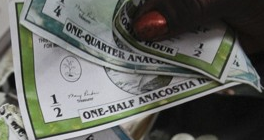
Anacostia Hours discussed in the Post

The Washington Post’s “Monopoly money? Nope, just local currency” discusses Anacostia Hours (around since 2006) and other local currencies:

Local or alternative currencies are almost as old as trade itself, but the movement has found new life amid the global financial crisis, as parallel economies outside the traditional monetary system have emerged in countries such as Spain, Mexico and Brazil. These systems are flourishing because the unemployed can either trade skills for local currency or swap their time for other services.

Read more here.

6 ways to get involved with Coop DC

Coop DC is a group of people who came together out of a desire to live in more cooperative communities. We are not a formal organization – we are what we organize together! Below are some ways you can get involved. Email info@coopdc.org with your ideas.

1. Join the Coop DC email list. We exchange articles, ideas, and plan events and gatherings.

2. Host or co-host a coop related gathering – a game night, film screening, skill share, or whatever you’re excited about.

3. Join or form a working group: building a regional coop network, starting a food coop in DC, renewable energy coops, and more.

4. Support local coops, and help us build out the coop directory.

5. Help us build out the resources page on the Coop DC website.

6. Help us get the videos from DC Coop Day online!